

Long hours at a desk take a real toll on the body. Many professionals come to us with lower back pain, stiff necks, tight hips and rounded shoulders that build up slowly over months of sitting. If this sounds familiar, you are not alone, and you do not have to accept it as part of the job.
Targeted movement is one of the most effective ways to ease discomfort and protect your spine. At Thrive Physio & Performance, we help desk workers every week as a trusted physiotherapy clinic in London. This guide covers the best physiotherapy exercises you can do at work or at home, along with advice on when to see a London physiotherapist.
Why Desk Work Causes Back Pain
The human body is built to move. When you sit for hours, the hip flexors shorten, the glutes switch off, and the muscles around your spine work overtime to hold you upright. Over time this creates tension, poor posture and reduced mobility.
Common causes of desk related back pain include:
- Slouching or leaning forward toward the screen
- Sitting without a break for long periods
- A chair or desk that is not set up for your body
- Weak core and glute muscles
- Stress, which often tightens the neck and shoulders
The good news is that simple physiotherapy exercises can reverse many of these problems when done consistently.
Best Physiotherapy Exercises for Office Workers
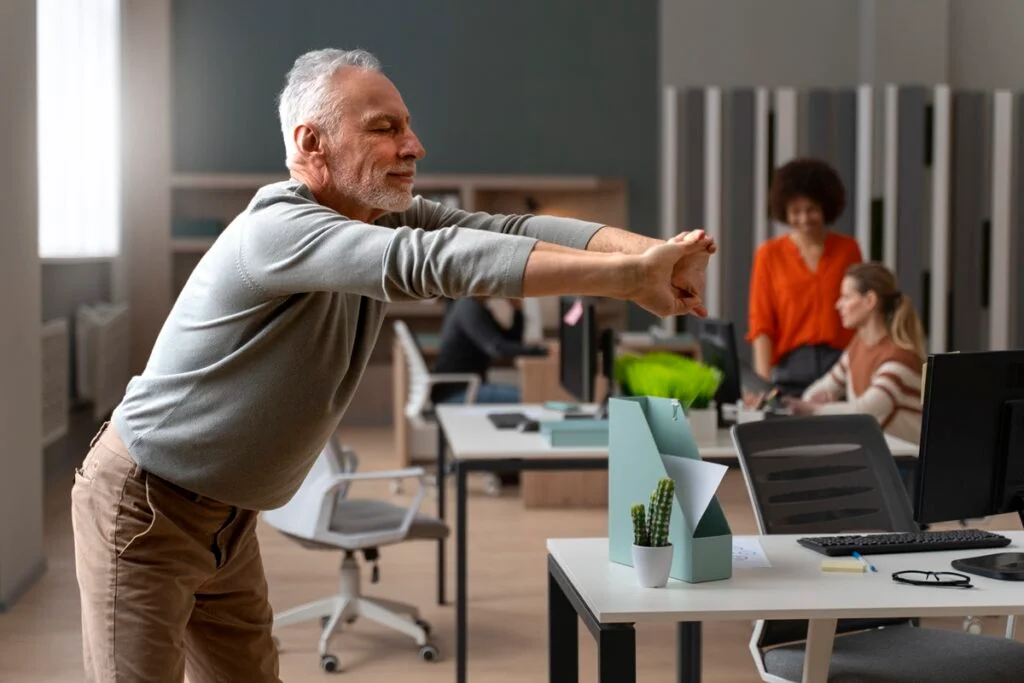
Move gently and never force a stretch. You should feel mild tension, not pain.
1. Seated Spinal Twist
Sit tall with your feet flat on the floor. Place one hand on the opposite knee and slowly rotate your torso. Hold for 10 to 15 seconds, then switch sides. This improves spinal mobility and relieves mid back stiffness.
2. Chin Tucks
Gently draw your chin straight back while keeping your eyes level, as if making a double chin. Hold for five seconds and repeat eight to ten times. Chin tucks ease neck strain caused by looking at screens.
3. Shoulder Rolls
Lift your shoulders toward your ears, roll them back and down in a slow circle, and repeat ten times. This releases upper back and shoulder tension.
4. Seated Cat Cow Stretch
Place your hands on your knees. Arch your back and lift your chest, then round your spine and drop your chin. Repeat for one minute. It keeps the spine moving and reduces stiffness.
5. Seated Forward Bend
Keep your back straight and fold forward from the hips, letting your hands slide toward the floor. Hold for 15 seconds. This gently stretches the lower back and hamstrings.
6. Standing Back Extensions
Stand tall, place your hands on your lower back and lean backward slowly. Hold for a few seconds and repeat five times. This counteracts the forward posture of prolonged sitting.
7. Pelvic Tilts
Sit or lie down with your knees bent. Gently flatten your lower back by tightening your abdominal muscles, then release. Repeat ten times. Pelvic tilts activate the core and reduce pressure on the lumbar spine.
8. Hip Flexor Stretch
Place one foot on a chair, or step into a gentle lunge, and lean forward slightly until you feel a stretch at the front of the opposite hip. Hold for 20 seconds on each side. Tight hip flexors are one of the most common issues in office workers.
9. Glute Bridges
Lie on a mat with your knees bent. Squeeze your glutes and lift your hips until your body forms a straight line from shoulders to knees. Hold for three seconds and repeat ten times. Strong glutes and core muscles take load off your lower back.
10. Wall Angels
Stand with your back against a wall. Slowly slide your arms up and down like making a snow angel, keeping contact with the wall. Repeat ten times. This improves posture and shoulder mobility.
How Often Should You Do These Exercises?
Consistency matters more than intensity. Aim for a short movement break every 30 to 60 minutes, even if it lasts only two minutes. Choose two or three exercises from the list and rotate them through the day. Set a reminder on your phone or computer so breaks become a habit. Do the strengthening exercises, such as glute bridges, three to four times a week at home.
Simple Workstation Tips
Exercises work best when paired with a good setup.
- Keep your screen at eye level so your neck stays neutral
- Sit with your hips and knees at roughly 90 degrees and feet flat on the floor
- Support the natural curve of your lower back with a cushion or lumbar roll
- Keep your keyboard and mouse close so your shoulders stay relaxed
- Stand, walk or stretch whenever you take a call
When Should You See a Physiotherapist?
Stretching helps with mild stiffness, but some symptoms need professional care. Stop exercising and seek help if you notice sharp pain, numbness, tingling, pain that travels down the leg, dizziness, or discomfort that lasts longer than a couple of weeks.
A skilled physio in London can assess your posture, movement and strength, find the root cause of your pain and create a plan that suits your job and lifestyle. Our team offers hands on treatment, personalized exercise programs and clear guidance so you can return to work and daily life comfortably.
Physiotherapy Treatment in London for Every Need
Back pain is only one of the conditions we treat. Our clinic offers a full range of care under one roof:
- Physiotherapy Treatment in London for back, neck, joint and muscle conditions
- Massage Therapy with registered massage therapists to release muscle tension
- Workplace Injury Treatment for strains and repetitive stress from work
- MVA Physiotherapy for recovery after motor vehicle accidents
- Concussion Treatment for safe, guided recovery
- TMJ Physiotherapy for jaw pain, clicking and tension headaches
- Pelvic Floor Therapist for pelvic pain, bladder and core support
- Vestibular Rehabilitation for dizziness and balance problems
Whether you need physical therapy in London for ongoing back pain or a targeted program after an injury, our team will build a plan around you.
Why Choose Thrive Physio & Performance?
Looking for the best physiotherapy in London? Here is what sets our London physiotherapy clinic apart:
- Experienced physiotherapists: Our team has the skills to treat a wide range of musculoskeletal and neurological conditions.
- Personalized treatment plans: No two bodies are the same, so every plan is built around your goals, job and lifestyle.
- Full range of services: From physiotherapy and massage to concussion care and vestibular rehabilitation, you can get everything in one place.
- Hands on, evidence based care: We combine manual therapy, exercise and education for lasting results.
- Convenient location and hours: We are easy to reach at 11 Base Line Rd E, London, open Monday to Friday 10am to 6pm and Saturday 9am to 6pm.
- Easy online booking: You can book your visit online in just a few clicks.
Frequently Asked Questions
1. What is the best exercise for back pain from sitting?
Pelvic tilts, standing back extensions, cat cow stretches and glute bridges are among the most effective. Together they improve mobility and strengthen the muscles that support your spine.
2. How often should office workers stretch?
A short stretch break every 30 to 60 minutes is ideal. Even two minutes of movement improves circulation and reduces stiffness.
3. Can physiotherapy help with long term desk related back pain?
Yes. A physiotherapist finds the cause of your pain, treats tight or weak areas and teaches you exercises and posture habits that prevent it from returning.
4. When should I see a physiotherapist instead of stretching at home?
See a professional if pain lasts more than two weeks, keeps coming back, spreads to your legs, or comes with numbness, tingling or weakness.
5. Do I need a referral to book physiotherapy in London?
In most cases you can book directly with our clinic. Contact us to confirm what applies to your situation and your insurance coverage.
Conclusion
Back pain does not have to be a daily part of office life. Regular movement, a better workstation and the right exercises can ease discomfort, improve posture and protect your spine for the long term. If your symptoms continue or you want expert guidance, professional care makes all the difference.
Book Your Appointment Today
Ready to feel better at your desk and beyond? Visit the leading physio clinic in London and let Thrive Physio & Performance create a plan that fits your life.
Call: 519 964 0416
Visit: 11 Base Line Rd E, London, N6C 5Z8
Book online: For Appointment